
When should you worry about cracks in your walls?
Discovering cracks in walls and ceilings can be concerning. Whether they appear suddenly or worsen over time, you may be wondering when you should start to worry about them.
Sometimes, small cracks in walls are just cosmetic flaws and they’re easy to cover with some simple DIY, yet they could also be indicators of more severe structural problems.
There are several reasons why you may experience superficial cracks in interior walls , such as settling, seasonal weather changes or minor vibrations from everyday living. However, not all small cracks are harmless and they can be an indication of sinking or damaged foundations. Recognising the signs of serious structural damage is the first step to ensuring the integrity, safety and value of your home.
Subsidence Cost Calculator
Get an estimate for the cost of subsidence repairs by visiting the Subsidence Cost Calculator page. Or call our team on 0333 1300592 for a free consultation and an accurate quote.
Also, use our subsidence postcode checker to see if subsidence is an issue in your area.
How to fix cracks in walls
When it comes to fixing cracks in walls , the solutions vary based on the severity and underlying causes. For minor, non-structural cracks, you can use a joint compound or spackle to fill them. Not only will this improve the appearance of your interior, but also prevent the cracks from expanding.
For more significant, structural cracks, it’s crucial to contact professionals. Early intervention from subsidence technicians can save you a lot of money and hassle in the future.
Hairline Cracks v Structural Cracks
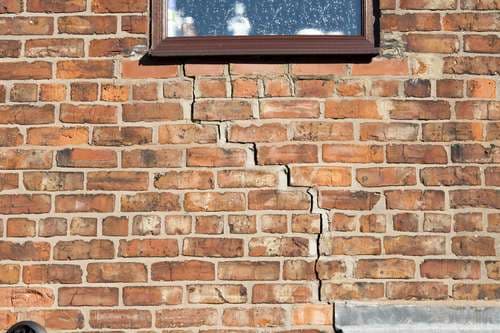
Identifying subsidence cracks in internal walls is key to addressing any potential structural issues before they cause significant damage. Cracks caused by subsidence typically appear diagonally or stepped, rather than the vertical cracks that are more common in aesthetic wall problems. Subsidence-related cracks are often wider at the top than the bottom too and generally speaking, cracks wider than 3mm are cause for concern.
They can also widen or change over time, indicating ongoing movement in the foundations. Where the cracks are is also an important indicator of subsidence, cracks near structural weak points like doors and windows or several cracks along the same wall can be a sign of subsidence.
As touched on above, not all cracks indicate problems with the structural integrity of your home. Small hairline cracks in plaster walls, especially near the corners of rooms or where the walls and ceilings meet, are often caused by things like damp patches drying or plaster expanding and contracting with changing weather.
If you have cracks in plaster and you’re wondering when to worry, check whether you can insert a coin into the crack. Larger cracks that grow over time, appear in multiple places or are accompanied by other signs of subsidence, like door frames sinking or sloping floors, require immediate attention.
 subsidence crack in external wall
subsidence crack in external wall
 internal subsidence crack
internal subsidence crack
Should I be worried about cracks in walls?
Although cracks can occur for lots of different reasons, there are a few key characteristics that indicate internal cracks in walls might be caused by subsurface movements and there is cause for concern. If you have cracks on interior walls, floors or ceilings that are getting wider, have a zigzagging pattern or branching formations, and are clustered in the same area, it may be time to start worrying. These types of cracks often suggest structural weaknesses and foundational shifts, and you may have subsidence.
When you notice worrying cracks in your home, you should contact a subsidence specialist straight away. They have the skills and experience required to repair cracks in walls, and prevent further damage caused by subsidence. Typically, expert technicians will conduct a detailed inspection of the cracks and your home’s foundations to determine the structural health of your home.
If subsidence is found, remedial measures may be required to maintain the long-term stability of your home. Traditionally, techniques like underpinning were recommended, but now modern alternatives like resin injections can address the root causes of the cracks.