
Reading the BRE crack severity scale.
The Building Research Establishment publishes the standard categorisation for crack severity. Knowing where your crack sits on it tells you almost everything you need to know.
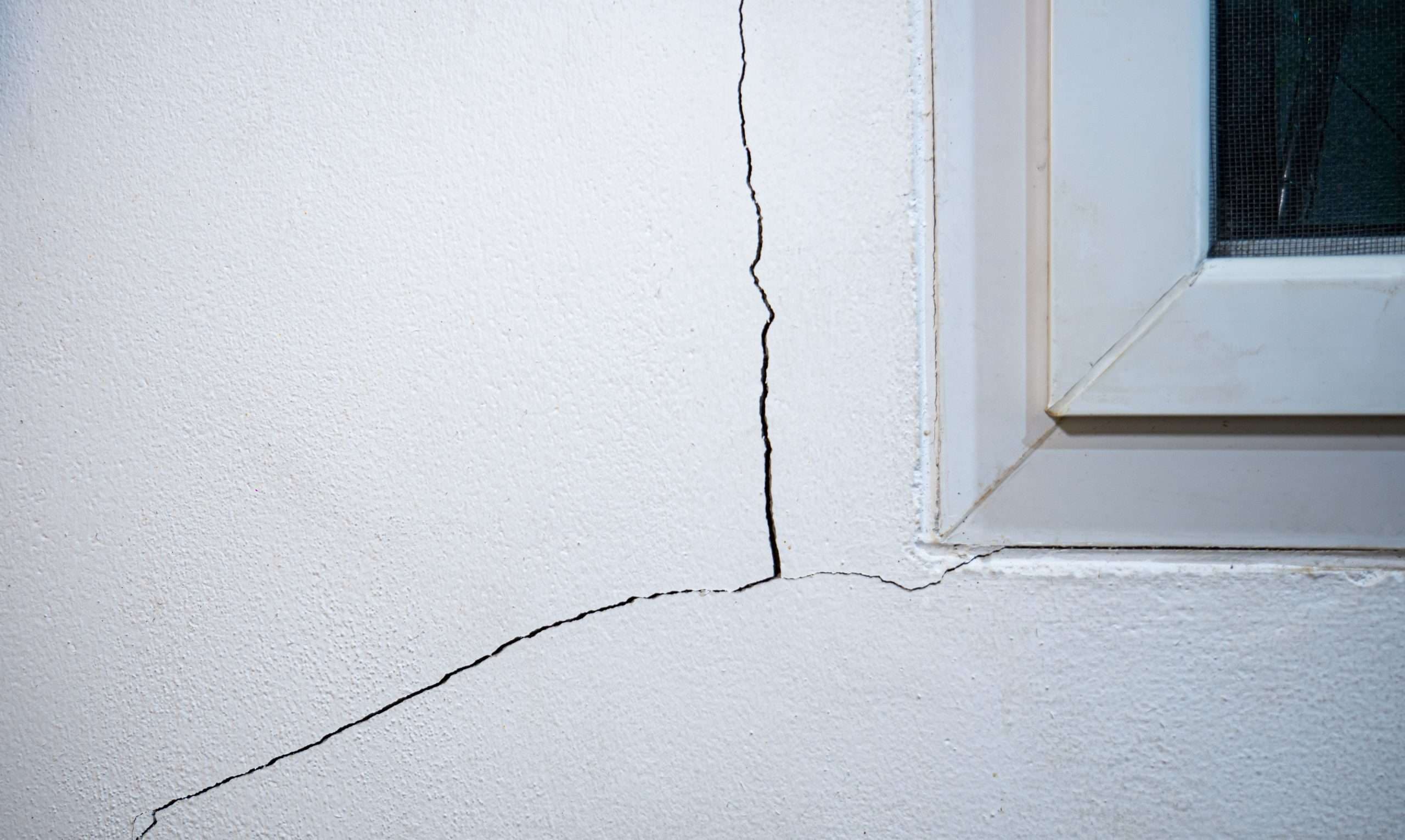
Seeing cracks appear is never a good feeling.
Some are harmless. Others are the first clear sign that your property is starting to move. Once movement starts it rarely stops on its own — which is why getting an engineer involved early can save you serious money and prevent long‑term damage.
At Subsidence Ltd we give advice and do the remedial work every day. We stabilise homes across the UK using resin injection that supports foundations with precision. We are usually in and out in a single day, and you do not need to move out or empty your home.
- Widening diagonal cracks at a window or door corner
- Stepped cracks following the mortar joints
- Cracks accompanied by sticking doors or windows
- Cracks accompanied by uneven floors
- New cracks not present six months ago
- Cracks growing past pencil marks within weeks
In masonry walls, the most diagnostic feature is whether the crack steps through the mortar joints (typical of subsidence) or runs straight through the bricks themselves (more typical of severe settlement or overload).
A diagonal stepped crack rising from the corner of a window opening, widening toward the top of the wall, is the strongest single visual indicator of foundation movement.
In rendered walls, look for the underlying pattern. A crack that follows a stepped line beneath flat render is usually masonry movement, not the render itself. A crack with sharp, straight edges only on the surface is more likely a render failure.
Internal plaster cracks above doors and windows are usually lintel deflection, not subsidence — unless they're accompanied by external diagonal cracking.
Less drama. More certainty.
Fast & clean
No excavation, no skips, no mess. Most jobs are completed in 1–2 days on site.
Precision engineering
16mm injection ports, laser‑level monitoring, depth controlled to the millimetre.
Rapid hardening
Structural resin reaches load‑bearing strength in minutes, not weeks.
Foundations restored
Re‑bears the soil column beneath the footing — the cause, not just the cracks.
Subcheck — a year of certainty for £495.
If you're seeing cracks but aren't sure they're growing, Subcheck baselines your home with a sub‑millimetre laser survey, alerts you if anything changes, and gives you a written engineering opinion at the twelve‑month mark.
The crack stops growing the moment you call.
Tell us what you're seeing. We'll book a same‑week survey, produce a written engineering report, and quote in plain numbers.